
Water companies make millions selling sewage sludge to farmers
Testing shows sludge being applied to land is contaminated with forever chemicals, microplastics and toxic pollutants
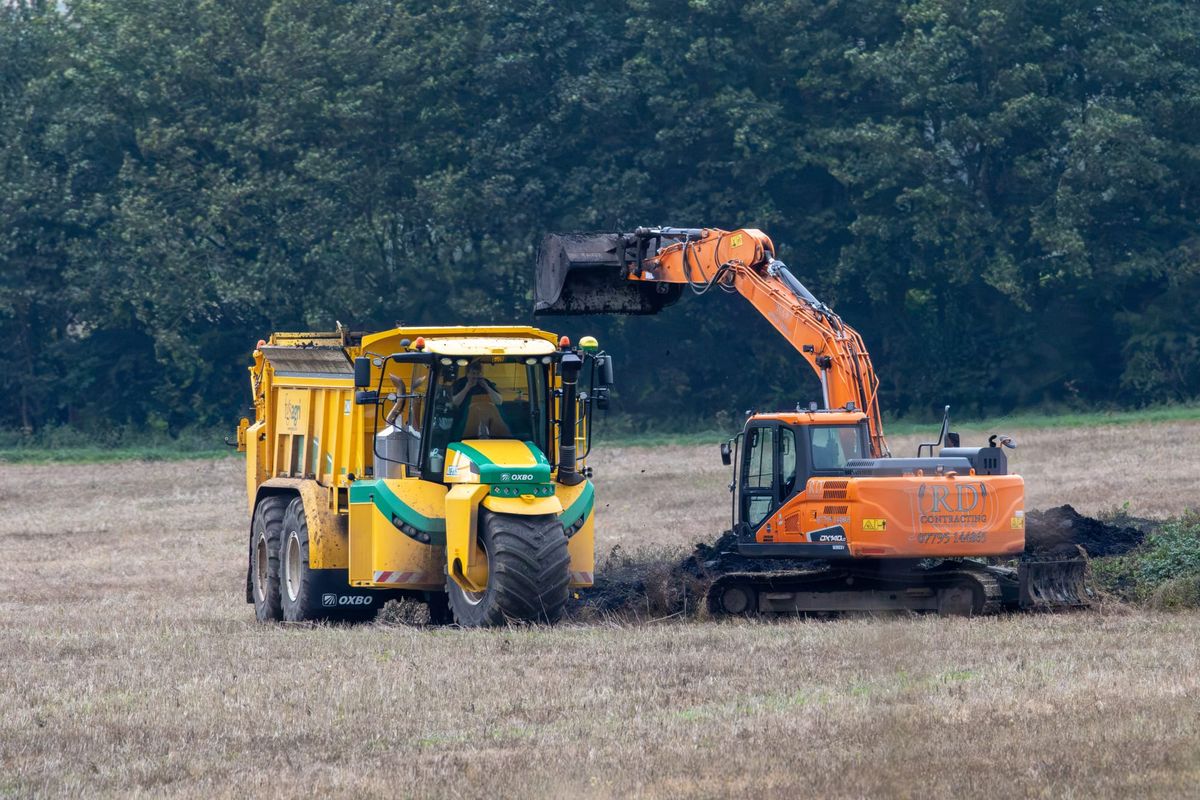
Sewage sludge being loaded onto a muckspreader in England. Photo: Bob L Parker / Shutterstock
England's water companies earn millions of pounds a year in revenue from selling sewage sludge to farmers for use as a fertiliser, despite concerns about its impact on human health and the environment.
Sludge, the solids left behind following the treatment of sewage, is widely applied to farmland in England and Wales, but the practice of sludge spreading has come under intense scrutiny over the past decade.
In 2017, an unpublished Environment Agency (EA) report warned that sludge destined for farmland contained pollutants at "levels that may present a risk to human health" and microplastics that could leave soil "unsuitable for agriculture". Recent tests have found sludge contaminated with forever chemicals.
Now an investigation by GRILLED has revealed the financial value of the industry's sludge sales. Exclusive data shows that England's water companies have made at least £31.1m selling sludge from 2019-2020 to 2024-2025.
But the investigation also uncovered a gap in the industry's financial reporting. Yorkshire Water reported no income from sludge sales, despite farmers paying £1.71m for its sludge through a contractor.
Six water companies reported no sludge sales income to industry regulator Ofwat. Four refused to disclose the requested financial information following environmental information requests filed by GRILLED, although one, United Utilities, subsequently said it does not charge for its sludge.
"It is absolutely outrageous that water companies are able to turn a profit by selling off sewage sludge to farmers with no public disclosure about what it contains or how much these companies are making off the back of it," said Dr Ellie Chowns, a Green MP and chair of the water pollution APPG.
Amy Fairman, head of campaigns for River Action, which sponsored this investigation, commented: "Recycling sewage sludge onto farmland can be part of a circular economy, but never at the cost of our health, our food or our rivers.
"Farmers and the public deserve to know what's going on the land. Outdated rules must not become a licence to pollute the countryside. If water companies are selling sludge, they must prove it's safe."
A spokesperson from Water UK, the industry trade body, told GRILLED: "Using bioresources on land is a long-established and independently regulated process that provides a useful source of nutrients for farming and saves farmers money."
"The UK Government has banned the sale of some products containing microplastics and we need the same action on PFAS. We also need a national plan to remove it from the environment, which should be paid for by the polluting manufacturers."
Data breakdown
The figures, provided to GRILLED by Ofwat following an environmental information request, came from annual performance reports that water companies are required to supply to the regulator. Separately, GRILLED filed similar requests directly with the companies.
They cover income over six years from the sale of treated sludge and its products, including to farmers. Nearly 90% of the UK's sludge is applied to farmland.
Anglian Water has the highest reported revenue, with £13.35m made over six years; followed by Severn Trent with just over £11m; Wessex Water made £3.34m; and Thames Water earned £3.39m but reported zero in its last two submissions. GRILLED analysis of Thames Water's public accounts suggests it made £2m across those two years, taking its total for the period to £5.4m. Thames Water failed to clarify the discrepancy when asked by GRILLED.
The companies all record income from sludge sales as negative expenditure, meaning it offsets the costs of handling sludge in the first place. Severn Trent told GRILLED it did not make a profit from sludge disposal because operating costs exceeded its revenue.
"Any income from direct sales of sludge, or processing of sludge for energy or fertiliser, does contribute to the companies' revenues - and if Ofwat allows it - to the companies' profits," said David Hall, an economics professor at the University of Greenwich.
But income from selling sludge is only a small part of the wider financial picture. The sludge sector is largely funded through sewerage charges in customer water bills, which cover sludge treatment, transport, recycling and disposal. An analysis of water company accounts by GRILLED shows that all but two water companies made an operating profit from their bioresources (sludge) businesses over five years, totalling £671m.
Missing income
In its submission to the regulator, Yorkshire Water recorded no income from sludge sales, but the company told GRILLED separately that between 2021 to 2025 its sludge sold for £1.71m.
That discrepancy is because the company uses a contractor to take its sludge, with sales offsetting the cost of its service. This arrangement - or similar contracts - is not reported to Ofwat as sludge revenue.
A further four water companies did not report sludge revenue to Ofwat, but unlike Yorkshire Water they also rejected environmental information requests filed by GRILLED.
- Northumbrian Water refused to provide figures, arguing disclosure would damage relationships with its "farming customers".
- Southern Water rejected the premise that the information requested was environmental in nature, and also said the figures relate to "arrangements with third parties".
- South West Water withheld its data citing commercial confidentiality, and even said its release could "push the wider industry towards offering sludge to landbank customers (farmers) at no charge".
- United Utilities claimed the information would reveal its "charging strategy for bioresources". A spokesperson has since told GRILLED the company does not charge for its sludge.
- Welsh Water told GRILLED it gives its sludge away for free so does not record income.
GRILLED also asked water companies whether they test sludge for contaminants including PFAS and microplastics, and whether they disclose the results to farmers. None provided details of such testing or disclosure. Northumbrian Water said it gives farmers information about heavy metals and nutrients. Severn Trent said it tests biosolids beyond regulatory requirements and shares information on nutrients and heavy metals.
"It is scandalous that water companies have been able to profiteer from the practice safe in the knowledge that the regulator is knowingly leaving the sector largely unregulated," Robert Forrester, an Environment Agency whistleblower who was pivotal in bringing the country’s sludge crisis to public knowledge, told GRILLED.
An Ofwat spokesperson said: "Water companies are responsible for the accuracy of the data in their annual performance reports. We can take enforcement action if a company misreports information."

New regulations
Earlier this year, the Department of Environment, Food and Rural Affairs (Defra) held a consultation on revising the rules which govern spreading sludge on farmland, including bringing the practice under the Environmental Permitting Regulations (EPR). This could mean spreading sludge on agricultural land would require a permit from the Environment Agency giving the regulator oversight of the practice.
"We recognise the need to use sludge safely and sustainably, helping to clean up our waterways and promote healthy soil," a Defra spokesperson said.
The current regulatory framework was introduced in 1989 and does not require testing for contaminants like PFAS and microplastics. The government's independent water sector review recommended bringing sludge spreading under the EPR’s purview.
"The guidelines on what levels of chemical pollution can be present in arable soils is woefully out of date," Dr David Megson, a forensic environmental scientist from Manchester Metropolitan University, told GRILLED.
"There is virtually nothing for emerging pollutants,” he said, and “for many of these things we still don’t know the risks they pose and how readily they may be taken up in crops or by livestock.”
Martin Lines, a Cambridgeshire farmer and the CEO of the Nature Friendly Farming Network, told GRILLED: "You cannot make an informed decision about risks to your soil, crops or livestock without knowing what's in the material. We need mandatory testing, clear disclosure of contaminants and full traceability, alongside much stronger controls on pollution entering the wastewater system."
Another farmer, who asked to remain anonymous, expressed further concerns: "No matter what testing is being carried out on sludge fertiliser, I do not have faith in it being safe enough to re-enter the food chain."
Some of these pollutants are introduced through industrial and commercial wastewater that the water companies are paid to accept. An investigation last month by Watershed Investigations, the Guardian and River Action found that water companies received more than £340m a year in revenue from these arrangements.
Last year an investigation by Unearthed, Greenpeace’s investigative journalism outlet, also revealed that the water industry is concerned about losing access to farmland for sludge, its main disposal outlet. Analysis commissioned by Water UK found that, in a worst-case scenario, the industry could be left with 3.4 million wet tonnes of sludge with nowhere to go. The EA warned of serious consequences if farmers or retailers lost confidence in the practice and said the industry had no "plan B".
One of the risk-factors included in the modelling was the prospect of bringing sludge under the EPR. The loss of available land for sludge, coupled with limited incineration capacity and tighter rules on waste incineration, could cost the industry hundreds of millions of pounds as it looks for better ways to get rid of its dirtiest product.
Dr Chowns said: "Farmers and the wider public have a right to know what is being spread on the soil which will grow our produce, especially when it may concern the introduction of pollutants like PFAS and microplastics.
"The government must urgently get to grips with the outdated and inadequate regulatory system which has allowed this practice to go largely unchecked, and Ofwat must act to ensure the profit earned from sludge sales is properly reported. Transparency and accountability must come before water company profits."